
Your Legal Rights After Anesthesia Malpractice in Tennessee: Brain Damage from Oxygen Deprivation
Even a few minutes without adequate oxygen during anesthesia can cause permanent brain damage that transforms a family’s future. Research shows that brief periods of oxygen deprivation during medical procedures can create lasting neurological changes. When anesthesia errors lead to hypoxic brain injury, families deserve answers and accountability from the medical professionals who failed to meet basic monitoring standards.
When these preventable errors occur, understanding anesthesia malpractice in Tennessee requires knowing how these failures happen and what legal protections exist for affected families. Tennessee law provides clear legal options for holding negligent healthcare providers responsible when their failures cause catastrophic brain injuries. Prompt legal action with experienced counsel can preserve critical evidence and strengthen your claim for the compensation your family needs.
If your loved one suffered brain damage from oxygen deprivation during anesthesia, Greer Injury Lawyers can help you understand your rights and fight for the justice your family deserves.

Understanding Anesthesia Errors and Hypoxic Brain Injury in Tennessee
When anesthesia malpractice hypoxic brain injury Tennessee cases arise, families need to understand what went wrong and why. Anesthesia should be safe when proper protocols are followed, but preventable errors can cause devastating brain damage within minutes. Tennessee law holds medical professionals accountable when they fail to meet accepted standards of care.
Common Anesthesia Errors That Lead to Brain Injury
Anesthesia errors often involve breaches of fundamental safety protocols that should protect every patient. Failed airway management occurs when doctors cannot properly insert breathing tubes or maintain clear airways during surgery. Inadequate observation means missing dangerous drops in oxygen levels or blood pressure. Medication dosing mistakes can cause respiratory depression or cardiac problems. Each of these errors can quickly deprive the brain of oxygen. The result is often permanent damage.
How Quickly Brain Damage Occurs When These Errors Happen
When these errors occur, the brain needs constant oxygen to survive, and hypoxic-ischemic brain injury can begin within just a few minutes of insufficient oxygenation. The American Society of Anesthesiologists requires continuous tracking of oxygenation through pulse oximetry, ventilation through end-tidal CO2 observation, and circulation through ECG and blood pressure checks. When these safety systems fail or are ignored, brain cells start dying rapidly. Even brief periods without adequate oxygen can cause lasting cognitive, motor, and behavioral problems.
Tennessee’s Legal Standard for Anesthesia Malpractice Cases
Tennessee evaluates medical negligence against what reasonably prudent anesthesia professionals would do in similar circumstances. Under the Tennessee Health Care Liability Act, families must prove that doctors deviated from accepted medical standards and that this deviation caused the brain injury. Our medical malpractice team stands ready to fight for families seeking justice, working with expert witnesses who understand both the medical standards and Tennessee law to build the strongest possible case for your family’s future.
Warning Signs of Brain Damage After Anesthesia-Related Oxygen Deprivation
As someone with medical training, you understand how quickly things can change when oxygen flow to the brain is disrupted during surgery. Recognizing the signs of brain damage from anesthesia malpractice in Tennessee empowers families to seek immediate medical intervention and protect their legal rights.
- Memory problems or confusion that wasn’t present before surgery, including difficulty remembering recent events or conversations
- New physical symptoms like weakness, balance issues, tremors, vision changes, or persistent headaches that developed after the procedure
- Personality or mood changes including increased irritability, depression, or emotional outbursts that seem out of character
- Difficulty with daily tasks such as trouble concentrating at work, school performance drops, or problems with routine activities
- Speech or coordination problems including slurred words, difficulty finding the right words, or clumsiness with fine motor skills
According to the Anesthesia Patient Safety Foundation, these symptoms can indicate serious brain injury that requires immediate medical evaluation. The American Heart Association emphasizes that prompt recognition and treatment of these neurological changes can make a significant difference in outcomes.
Document everything you notice and share these observations with your medical team right away. If medical professionals failed to properly monitor oxygen levels or respond to complications, you may have grounds for an anesthesia errors claim that can help secure the care and compensation your family needs.
How Families Prove Anesthesia Malpractice Caused Brain Damage in Tennessee
As a healthcare professional, you understand that medical evidence tells a story. When building a case to prove anesthesia malpractice caused brain damage in Tennessee, that story must connect every medical detail to show exactly what went wrong and why your loved one deserves justice.
Documenting Each Step of the Medical Timeline
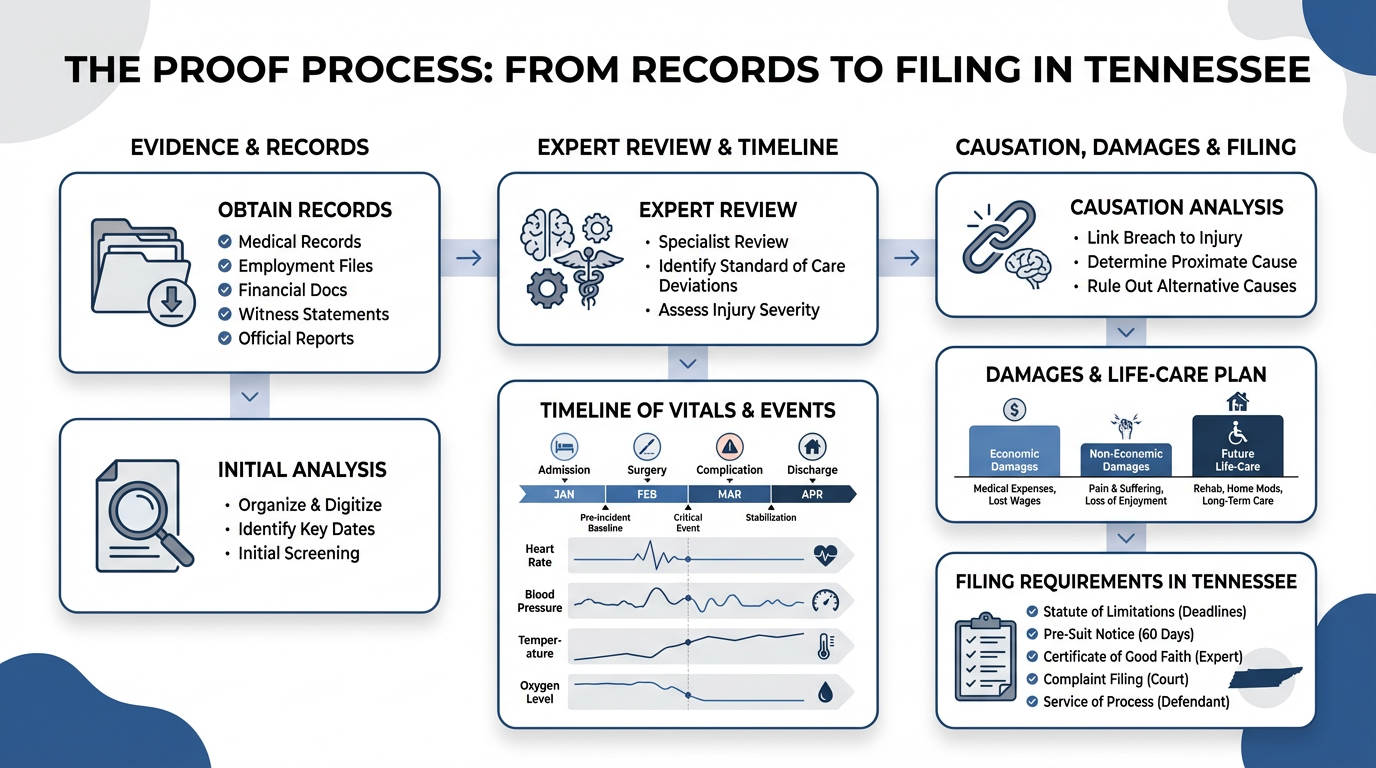
Strong cases require a complete picture from pre-surgery through recovery. Your legal team must carefully review pre-operative assessments, anesthesia records, continuous monitoring data, and post-operative evaluations. For example, if pulse oximetry readings show oxygen levels dropping from 98% to 85% for several minutes without documented intervention, this gap becomes powerful evidence. According to ASA monitoring standards, anesthesiologists must maintain continuous monitoring with audible alarms. Missing traces or unexplained monitoring gaps in records often reveal where anesthesia errors occurred.
Securing Qualified Medical Specialists
State law requires independent medical testimony to establish what should have happened and prove the connection to brain injury. Under Tennessee’s medical malpractice statute, these specialists must be licensed and practicing in Tennessee or neighboring states. Your case needs anesthesiology professionals to identify monitoring failures, neurology specialists to link oxygen deprivation to brain damage, and life-care planners to document future needs. At Greer Injury Lawyers, our full-time registered nurse helps coordinate these reviews and ensures nothing gets overlooked.
Navigating State Legal Requirements
Tennessee has specific procedural steps that can challenge families without proper legal guidance. The state requires a certificate of good faith with qualified medical review before filing suit. Families must also provide pre-suit notice to healthcare providers within strict deadlines. These requirements exist to ensure cases have merit, but they can feel overwhelming when you’re focused on your family member’s care. Experienced attorneys handle these procedural steps while you concentrate on what matters most.
Tennessee Legal Essentials: Deadlines, Damages, and Why Experienced Counsel Matters
Tennessee law imposes strict deadlines that can make or break your anesthesia malpractice case. You must provide 60-day pre-suit notice to the healthcare providers you intend to sue before filing your lawsuit, and this requirement adds time pressure to an already short filing window. Missing these deadlines can permanently bar your family from seeking the justice you deserve, regardless of how strong your case might be. An experienced anesthesia malpractice lawyer in Tennessee understands these procedural requirements and can protect your family’s rights from the very beginning.
Beyond timing considerations, documenting damages in brain injury cases requires comprehensive evidence that goes far beyond initial medical bills. Tennessee law allows recovery of economic damages like ongoing therapy costs and lost earning capacity, but noneconomic damages for pain and suffering face statutory caps. Your legal team must work with life care planners, economists, and medical experts to build a complete picture of your family’s losses. At Greer Injury Lawyers, our full-time registered nurse helps identify medical record details that other attorneys might miss, strengthening your claim for maximum compensation under Tennessee medical malpractice law.
Frequently Asked Questions: Your Rights and Next Steps
When your family faces the aftermath of anesthesia-related brain damage, you need clear answers about your legal options. These questions address the most pressing concerns families have about pursuing justice and securing their future in Tennessee.
Why is it important to hire an experienced anesthesia malpractice lawyer in Tennessee?
Anesthesia cases require deep medical knowledge to identify subtle record issues and prove causation. Experienced attorneys understand Tennessee’s strict procedural requirements, including the certificate of good faith filing (a sworn statement that an expert reviewed your case). At Greer Injury Lawyers, our full-time registered nurse and willingness to take complex cases to trial make the difference.
What compensation can victims of anesthesia-related brain damage receive in Tennessee?
Families can recover medical expenses, future care costs, lost wages, and noneconomic damages (pain and suffering, emotional distress). However, Tennessee caps noneconomic damages at $750,000 total across all family members. Economic damages like medical bills and lost income have no caps, making thorough documentation of long-term needs essential for medical malpractice cases.
How long do families have to file an anesthesia malpractice lawsuit in Tennessee?
Tennessee generally requires filing within one year of discovering the injury, with a three-year absolute deadline from the negligent act. You must also provide 60 days pre-suit notice to healthcare providers. These deadlines are strict, so getting legal help quickly protects your rights and preserves evidence.
What makes anesthesia malpractice cases different from other medical negligence claims?
Anesthesia errors involve complex monitoring equipment, medication protocols, and airway management that require specialized medical expertise to evaluate. The brief timeframe where oxygen deprivation occurs makes precise timeline reconstruction and expert testimony absolutely necessary for proving your case.
How do I know if my family has a valid anesthesia malpractice claim?
If brain damage occurred after surgery with no clear medical explanation, or if monitoring records show unexplained oxygen drops or blood pressure changes, you may have a claim. New cognitive, motor, or behavioral changes following anesthesia warrant immediate legal review to preserve your rights and build the strongest possible case.
Compassionate Advocacy and a Clear Path Forward
When anesthesia errors cause brain damage, your loved ones face complex medical and legal challenges that demand immediate attention. Tennessee’s strict deadlines for medical malpractice claims mean waiting can jeopardize your right to compensation. That’s where experienced legal representation becomes essential.
Your family deserves medical malpractice representation that Memphis, Jackson, and West Tennessee families can trust during this difficult time. With a full-time registered nurse on staff and a proven track record of multi-million dollar verdicts, experienced counsel can navigate the complex process of proving negligence while you focus on your loved one’s care. The right legal team will handle everything from expert witness coordination to comprehensive case preparation, ensuring no detail is overlooked. You pay nothing unless we win.
Contact Greer Injury Lawyers today for a free consultation to discuss your anesthesia malpractice case and learn how we can fight for the justice and compensation you deserve.


Since graduating magna cum laude in 2005 from the University of Memphis School of Law, Thomas has helped make a difference in the lives of victims of serious personal injury, wrongful death, and professional negligence. Thomas has extensive trial experience in both state and federal court. Among other victories in the courtroom, Thomas obtained several impressive jury verdicts and settlements
Read more about Thomas R. Greer