
What to Do If You Suspect Delayed Emergency C-Section Malpractice in Arkansas
When labor takes a dangerous turn, every minute counts. A delay of just 30 minutes in performing an emergency cesarean section can mean the difference between a healthy baby and a lifetime of cerebral palsy or other devastating birth injuries. Medical teams know this, yet preventable delays still occur across Arkansas hospitals.
When warning signs of fetal distress are ignored or medical teams fail to act quickly enough, families deserve answers and accountability. You may have grounds for a medical malpractice claim if delayed cesarean delivery caused harm to you or your baby. Arkansas law provides legal recourse for these situations, but strict filing deadlines apply. Understanding the medical red flags, preserving evidence, and taking swift action can protect your family’s rights and secure your child’s future. Get the experienced birth injury representation from Greer Injury Lawyers that your family needs to fight for justice.

Recognizing Red Flags: Signs and Causes of Delayed Emergency C-Section Malpractice
When labor takes an unexpected turn, medical teams must act swiftly to protect both mother and baby. Understanding the signs of delayed emergency C-section malpractice in Arkansas can help families recognize when something went wrong and seek the justice they deserve.
Clinical Warning Signs That Demand Immediate Action
Certain medical conditions create urgent situations where every minute counts. Non-reassuring fetal heart tracings, particularly Category III patterns, signal severe fetal distress requiring immediate delivery. Placental abruption, where the placenta separates from the uterine wall, can cause dangerous bleeding and oxygen deprivation to the baby. Uterine rupture threatens both lives and demands emergency surgery. According to the American College of Obstetricians and Gynecologists, these conditions require coordinated team responses and clear protocols to prevent devastating outcomes.
Common System Failures That Cause Dangerous Delays
Even when warning signs are clear, delays can still occur due to breakdowns in hospital systems rather than individual mistakes. Poor fetal monitoring, inadequate staffing during busy periods, and slow communication between nurses and doctors can create dangerous delays. Research shows that decision-to-delivery intervals often exceed recommended timeframes due to operating room availability and team coordination issues. When hospitals fail to follow established protocols for urgent circumstances, babies and mothers suffer preventable injuries that could have been avoided.
Arkansas Legal Standards for Emergency Obstetric Care
In Arkansas malpractice cases, courts examine whether medical providers met the standard of care expected from reasonably careful professionals in similar circumstances. This means comparing the actual response time and decision-making to what other qualified obstetric teams would have done facing the same emergency. Expert witnesses review fetal monitoring strips, nursing notes, and hospital policies to determine if delays violated accepted medical standards. The legal question becomes whether proper monitoring, timely recognition of distress, and swift action could have prevented the injuries your family now faces.
How Delays Cause Harm: Newborn and Maternal Injuries Linked to Late C-Sections
When emergency C-sections are delayed, the consequences can be devastating for both mother and baby. Understanding these potential injuries helps families recognize when medical care fell short of accepted standards.
The medical evidence shows clear connections between delayed delivery and serious complications. Birth injuries from delayed C-section in Arkansas cases often involve measurable changes in vital signs and test results that document the harm.
- Oxygen deprivation injuries develop when babies experience prolonged distress, leading to hypoxic-ischemic encephalopathy (brain injury from lack of oxygen), cerebral palsy, and seizures
- Physical birth trauma occurs during difficult deliveries, causing brachial plexus injuries, fractures, and meconium aspiration syndrome
- Maternal complications escalate rapidly, including postpartum hemorrhage, infections, uterine rupture, and emergency hysterectomy
- Measurable injury markers like low Apgar scores, abnormal cord blood gases (blood tests from the umbilical cord), and NICU admissions show clear connections between delays and harm
- Long-term disabilities may include intellectual impairment, motor delays, and brain damage requiring lifelong care
Medical records contain objective data that can link timing delays to injury severity. Research shows that, while the 30-minute delivery benchmark isn’t universally evidence-based, prolonged delays in true emergencies lead to worse outcomes. Therapeutic interventions work best when started promptly after birth. This evidence becomes the foundation for building a strong legal case.
What To Do Now: Medical Care, Documentation, and Reporting Steps
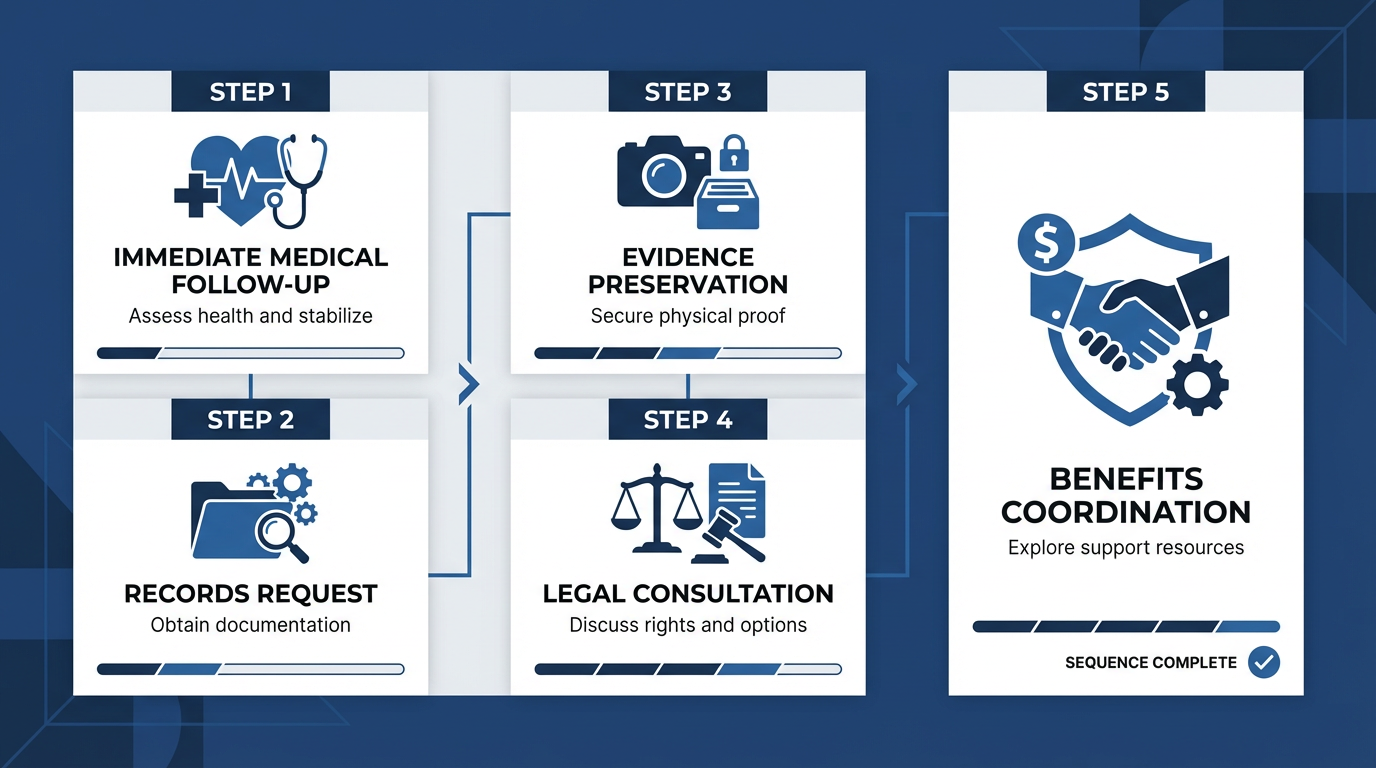
When you suspect something went wrong during your delivery, taking swift action protects both your child’s health and your family’s legal rights. Knowing what to do after delayed C-section Arkansas cases can make the difference between preserving important evidence and losing it forever.
- Schedule immediate follow-up with pediatric specialists, including neurology and developmental pediatrics for comprehensive evaluation
- Request complete medical records including fetal monitoring strips, operative notes, and nursing documentation
- Preserve cord blood gas results, imaging studies, and laboratory reports before they’re permanently stored or destroyed
- Document your child’s symptoms, feeding difficulties, developmental delays, and medical appointments in a detailed journal
- Contact experienced legal counsel immediately, as Arkansas law imposes strict deadlines on malpractice claims
Acting quickly protects families by preserving the medical evidence needed to build a strong case and secure your child’s future. The sooner you take these steps, the better positioned you’ll be to address both immediate medical needs and potential long-term care requirements while ensuring your legal rights remain protected.
Arkansas Law: Proving Negligence, Deadlines, and Potential Compensation
When your child suffers injuries from a delayed emergency C-section, understanding your legal rights under Arkansas law becomes your next fight for their future. Arkansas has clear rules for medical malpractice cases, and knowing how to prove medical negligence in delayed C-section cases in Arkansas can help you secure the resources your family needs.
The Four Elements: What You Must Prove
Arkansas law requires proving four elements for any medical malpractice claim. First, the medical team owed you a duty of care, which exists once they accept you as a patient. Second, they breached the Arkansas standard of care by failing to act as a reasonably careful obstetric team would under similar circumstances. Third, you must show the delay directly caused your child’s injuries—connecting the timeline of fetal distress to conditions like brain damage from oxygen loss. Fourth, you suffered actual harm from medical bills to lifelong care needs.
Arkansas Deadlines: Time Limits That Matter
Arkansas generally gives families two years to file medical malpractice claims under Arkansas Code Annotated § 16-114-203. However, special rules apply when children are injured or in wrongful death cases, potentially extending or shortening these deadlines. The two-year countdown usually begins when you first discover the injury, which may be months after birth. Missing these deadlines can permanently bar your claim, regardless of how strong your case might be.
Compensation: What Families Can Recover
Arkansas allows families to seek comprehensive compensation for delayed emergency C-section injuries. Economic damages cover past and future medical expenses, specialized therapies, adaptive equipment, and lost earning capacity if your child cannot work as an adult. Non-economic damages address pain, suffering, and diminished quality of life. In cases involving cerebral palsy or severe brain injuries, life-care planning experts help calculate decades of future needs to ensure adequate compensation.
Building the Case: Evidence, Experts, and the Standard of Care
Strong delayed emergency C-section cases depend on complete electronic fetal monitoring records that show exactly when distress began and how medical teams responded. Fetal heart rate monitoring provides continuous tracings that reveal non-reassuring patterns. These strips become your most powerful evidence when board-certified obstetric experts review them alongside hospital policies, nursing notes, and communication records to determine whether the medical team followed established medical standards or delayed action when minutes mattered.
Beyond gathering evidence, experienced birth injury lawyers coordinate teams of specialists to build comprehensive cases and quantify lifelong needs. Pediatric neurologists diagnose conditions like cerebral palsy or brain injuries that result from oxygen deprivation during delayed deliveries. Life-care planners calculate decades of therapy, equipment, and medical costs to ensure fair compensation, as shown in real-life birth injury cases where comprehensive preparation led to substantial recoveries. This demonstrates why hiring an experienced birth injury lawyer for C-section malpractice cases is essential—coordinating multiple medical experts while building trial-ready cases pressures insurance companies to resolve fairly rather than risk courtroom verdicts.
Frequently Asked Questions: Delayed Emergency C-Section Malpractice in Arkansas
When facing the aftermath of a difficult birth, families often have urgent questions about their rights and next steps. These answers address the most pressing concerns about recognizing malpractice, understanding Arkansas law, and protecting your family’s future.
What are the most common warning signs of a delayed emergency C-section?
Key warning signs include Category III fetal heart patterns showing severe distress, prolonged bradycardia, or recurrent late decelerations that weren’t acted upon promptly. Other red flags include failure to respond to uterine rupture, placental abruption, or cord prolapse within accepted timeframes.
How long do I have to file a delayed C-section malpractice claim in Arkansas?
Arkansas generally provides two years from discovery of the injury to file medical malpractice claims. Birth injury cases involving minors may have different deadline rules. Consulting knowledgeable counsel early protects your rights, ensures proper deadline compliance, and often includes a free initial consultation.
What compensation can families seek after delayed emergency C-section malpractice in Arkansas?
Families may recover medical expenses, future care costs, therapy needs, lost earning capacity, and pain and suffering. In cases involving severe birth injuries, compensation can reach millions of dollars to cover lifelong care and support needs through comprehensive birth injury representation.
How do lawyers prove the delay caused my baby’s injuries?
Attorneys use medical records, fetal monitoring strips, and expert testimony to establish timing and causation. Birth injury cases require correlating the delay with objective evidence like cord blood gases, Apgar scores, and neurological findings to demonstrate how prompt action could have prevented harm.
Do I need an Arkansas-licensed lawyer, and will my case go to trial?
Skilled birth injury attorneys can handle Arkansas cases, often partnering with local counsel when needed for court filings. Most cases settle, but having trial-ready lawyers strengthens your position. Insurance companies respond more seriously to representation by attorneys willing to fight in court.
How much does it cost to hire a birth injury lawyer, and what if we can’t afford one?
Seasoned birth injury attorneys work on contingency, meaning no fees unless you win. This arrangement allows families to access professional legal representation regardless of financial circumstances. Initial consultations are typically free, letting you explore what legal options after delayed emergency C-section in Arkansas might be available.

Take the Next Step: Protect Your Child’s Future With Experienced Advocacy
When you suspect a delayed emergency C-section harmed your child, your heart breaks and time matters. Arkansas law gives families strict deadlines to pursue medical malpractice claims. That’s why securing skilled legal representation quickly becomes your most important decision to preserve your rights.
When you work with seasoned birth injury attorneys, you gain advocates who understand both the medical complexities of birth injuries and Arkansas legal requirements. A trial-ready team with specialized knowledge can work to secure fair resolutions while you focus on your child’s care. When you hire birth injury lawyer Arkansas families trust, you gain partners who fight as fiercely for your child’s future as you do.
Contact Greer Injury Lawyers for compassionate, experienced birth injury representation—you pay nothing unless we win.


Since graduating magna cum laude in 2005 from the University of Memphis School of Law, Thomas has helped make a difference in the lives of victims of serious personal injury, wrongful death, and professional negligence. Thomas has extensive trial experience in both state and federal court. Among other victories in the courtroom, Thomas obtained several impressive jury verdicts and settlements
Read more about Thomas R. Greer