
Arkansas Car Accident Laws Explained: What to Do After a Crash
The decisions you make in the first hour after a car accident can determine whether your family receives full compensation or faces years of financial struggle. When serious injuries like traumatic brain injury occur, those early steps become even more critical for protecting your loved one’s future care and recovery.
Arkansas car accident laws create specific rules about fault, insurance claims, and filing deadlines that directly impact your family’s financial security. Understanding what to do immediately after a crash, how Arkansas’s 50% comparative fault system works, and when to seek legal help can mean the difference between a fair settlement and a denied claim. If your family is facing the overwhelming aftermath of a serious car accident, Greer Injury Lawyers provides the compassionate, relentless advocacy you need to secure your future.

What To Do Immediately After a Car Accident in Arkansas
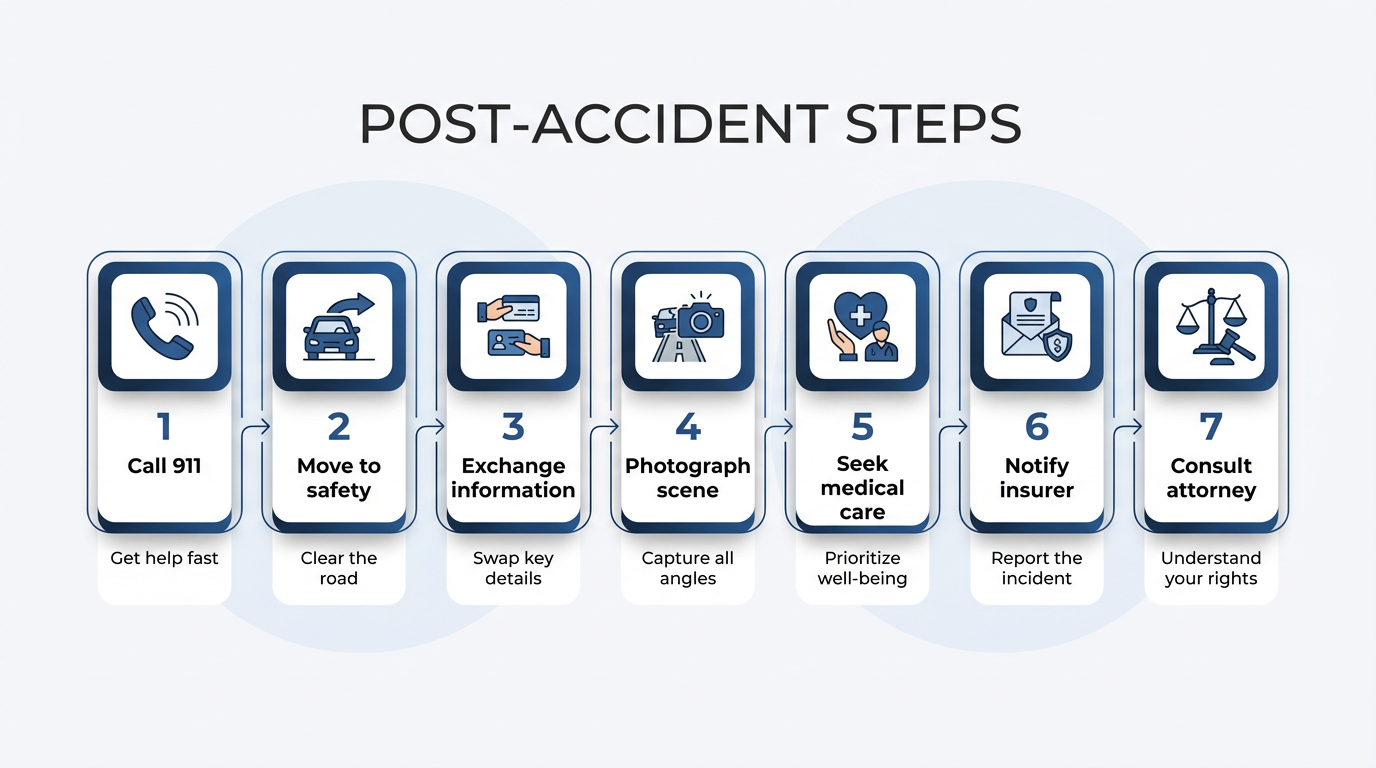
When you’re standing at an accident scene worried about your loved one’s injuries, knowing what steps should I take immediately after a car accident in Arkansas can feel impossible to remember. The shock and fear are overwhelming, but taking three specific actions right now will protect your family’s health and legal rights. Here’s exactly what to do: call for help, preserve proof of what happened, and get medical care without delay.
Call 911 and Request Police and EMS
Your first priority is getting help to the scene. Call 911 immediately, even for accidents that appear minor. Arkansas law requires drivers to notify law enforcement for crashes involving injury, death, or property damage over $3,000. The police report becomes your strongest ally when dealing with insurers who question what really happened. Adjusters base their liability decisions heavily on this official account. You can request your crash report from Arkansas State Police about 10 business days later for a $25 fee, giving you the same information the other driver’s insurer will use.
Preserve Proof Before It Disappears
While waiting for police, collect contact information and statements from witnesses before they leave the scene. Take photos and videos of vehicle damage, the accident scene, road conditions, and any visible injuries. Capture license plates, driver details, and the other party’s coverage information. Weather conditions, skid marks, and debris patterns all tell the story of what happened. Proof disappears quickly from accident scenes, so gather everything you can while it’s still available. This information becomes invaluable when building your motor vehicle accident case.
Get Medical Care Without Delay
Seek medical attention immediately, even if you or your loved one feels okay. Adrenaline masks serious injuries like traumatic brain injuries, which may not show symptoms for hours or days after impact. Prompt medical care creates an undeniable connection between the crash and any injuries, which insurers will examine closely. Follow up with specialists as recommended and keep detailed medical records. Waiting to seek treatment gives insurers ammunition to question whether the accident truly caused your injuries, potentially jeopardizing the compensation your family needs for recovery.
These immediate steps lay the groundwork for everything that follows, from dealing with adjusters to understanding how Arkansas’s specific laws will affect your claim.
How Arkansas Laws Shape Your Claim: Fault, Deadlines, and Insurance
When your son is recovering from a traumatic brain injury, you need to understand how Arkansas car accident laws affect your insurance claim. These legal rules directly determine how much compensation your family can recover and how quickly you need to act to protect your rights.
- Arkansas follows a 50% fault rule – If you’re found 49% or less at fault, you can still get compensation, but it gets reduced by your percentage of fault. For example, if you’re awarded $100,000 but found 20% at fault, you’d receive $80,000. However, if you’re 50% or more at fault, Arkansas law prevents you from getting any compensation at all.
- You have three years to file a lawsuit – Arkansas gives you three years from the accident date to take legal action, but starting early gives you the best chance of building a strong case while evidence is still fresh.
- Arkansas requires basic liability coverage – All drivers must carry at least $25,000 per person, $50,000 per accident for injuries, and $25,000 for property damage, but these amounts rarely cover the true cost of serious injuries like your son’s TBI.
- Optional coverage can fill the gaps – Personal Injury Protection (PIP), Medical Payments (MedPay), and Uninsured/Underinsured Motorist coverage aren’t required but can help pay medical bills and lost wages when the other driver doesn’t have enough insurance.
- Insurance companies start building their defense immediately – While you’re focused on your son’s medical care, the other side is already working to minimize their payout, making it important to get a car accident lawyer involved early to level the playing field.
- Strong documentation protects your family’s future – Since Arkansas requires proving the other driver’s negligence while minimizing your own fault, you need thorough evidence collection and medical records that show the full extent of your son’s injuries.
- Long-term care planning requires legal expertise – TBI cases often involve lifetime medical needs, lost earning capacity, and specialized care that insurance companies don’t want to pay for without a fight.
Getting the right legal guidance now helps ensure your family gets the compensation needed for your son’s recovery and future care.
Protecting Your Family’s Recovery: Dealing With Insurers and Building Proof
Insurance adjusters may seem helpful, but their job is to minimize payouts, not maximize your recovery. When they call asking for a recorded statement, politely provide only basic facts like the date, time, and location of the crash. Avoid discussing fault, injuries, or how the accident happened in detail. Even innocent comments like “I didn’t see them coming” can be used to assign you 35% or more fault under Arkansas’s comparative negligence law, significantly reducing your settlement.
Building a complete picture of your family’s damages requires careful documentation from day one. Keep every medical record, specialist report, and therapy note, especially for serious injuries like traumatic brain injury where symptoms may worsen over time. Your attorney can work with medical experts to create a life-care plan that captures future medical costs, rehabilitation needs, and lost earning capacity. This comprehensive approach shows why it’s important to hire a car accident lawyer after a crash in Arkansas. They know how to preserve evidence like vehicle data recorders and surveillance footage before it disappears, preventing insurance companies from using missing information against your claim.
Your Arkansas Car Accident Questions, Answered
After a serious crash, families face urgent questions about their rights, insurance coverage, and recovery options. Here are clear answers to help you understand your legal rights after being injured in an Arkansas car accident.
Do I have to report the crash?
Yes, Arkansas law requires you to report crashes involving injury, death, or property damage exceeding $3,000 to local police immediately. You must also file an SR-1 form with the state within 30 days. Police reports become crucial evidence for your claim process.
Should I use my health insurance or MedPay/PIP first?
Use your health insurance first when possible, as it typically has better provider networks and lower out-of-pocket costs. MedPay and PIP can cover deductibles and copays. An experienced lawyer can coordinate benefits to maximize coverage while preserving your right to full compensation from the at-fault driver.
What compensation can I recover for a TBI, including future care and lost earning capacity?
TBI cases can recover medical expenses, rehabilitation costs, lost wages, pain and suffering, and future care needs. Life-care plans, created by medical experts, outline ongoing therapy, medication, and assistance requirements. Lost earning capacity considers how the injury affects your loved one’s ability to work throughout their lifetime.
How soon should I talk to a lawyer, and what does it cost?
Contact an attorney immediately after serious injuries. We understand this is overwhelming, but early involvement preserves evidence and protects your rights. Most personal injury attorneys work on contingency, meaning no upfront costs and you pay only if they win your case.
How does comparative fault impact my settlement if both drivers made mistakes?
Arkansas follows a 50% rule: if you’re less than 50% at fault, you can recover damages reduced by your percentage of fault. If you’re 20% at fault for a $100,000 claim, you’d receive $80,000. Being 50% or more at fault prevents any recovery. Partial responsibility doesn’t eliminate your claim.
What if the at-fault driver is uninsured or has low limits?
Your uninsured/underinsured motorist coverage can fill the gap if you purchased it. Arkansas requires minimum coverage of $25,000 per person, but higher limits provide better protection. If you lack coverage and the at-fault driver has insufficient insurance, recovery options become limited to their available assets.
Can social media posts hurt my claim?
Yes, insurers monitor social media for posts that contradict injury claims. Photos showing physical activity or positive statements about recovery can be taken out of context. Keep profiles private and avoid posting about your accident, injuries, or activities during your case.
Next Steps: Compassionate, Relentless Advocacy for Your Family
Understanding Arkansas’s comparative fault rules and three-year deadline gives you the foundation to protect your claim, but navigating insurance battles and building proof requires experienced guidance. The right legal team understands that every day matters when securing the resources your family needs for long-term recovery.
You need motor vehicle accident representation that puts your family first. Our approach includes direct access to experienced trial attorneys, a full-time registered nurse on staff who understands complex medical needs, and personalized legal strategies that account for long-term care costs and lost income. We handle everything from insurance negotiations to safety responsibility filings, so you can focus on what matters most.
Contact Greer Injury Lawyers today for your free consultation—you pay nothing unless we win your case.


Since graduating magna cum laude in 2005 from the University of Memphis School of Law, Thomas has helped make a difference in the lives of victims of serious personal injury, wrongful death, and professional negligence. Thomas has extensive trial experience in both state and federal court. Among other victories in the courtroom, Thomas obtained several impressive jury verdicts and settlements
Read more about Thomas R. Greer