
Anesthesia Errors in Arkansas: Brain Injury and Surgical Malpractice Explained
A single moment of inadequate oxygen monitoring can deprive the brain of the oxygen it needs to function in just minutes. What should be a routine surgery can transform into a devastating brain injury when anesthesia errors occur due to equipment failures, medication mistakes, or monitoring lapses.
When this happens, families face overwhelming medical bills, complex legal questions, and uncertainty about their loved one’s future. Understanding how these preventable errors occur, what Arkansas law requires from healthcare providers, and how experienced legal advocates can help secure compensation becomes the foundation for moving forward with confidence and hope.
If your family is dealing with a brain injury caused by anesthesia errors, Greer Injury Lawyers provides compassionate, trial-ready representation to fight for the justice and compensation you deserve.

How Anesthesia Errors Cause Brain Injury During Arkansas Surgeries
When anesthesia errors occur, brain injury can result within minutes. Understanding the common causes of anesthesia errors in Arkansas helps families recognize when avoidable mistakes have occurred. For families facing these situations, understanding what went wrong is the first step toward seeking justice. These errors follow predictable patterns that experienced medical teams should anticipate and prevent.
Oxygen Deprivation: The Direct Path to Brain Damage
The brain needs constant oxygen to survive. When anesthesia interferes with breathing or oxygen delivery, brain cells begin dying within minutes. Hypoxic injuries occur when monitoring equipment fails, breathing tubes become displaced, or ventilator settings are incorrect. The American Society of Anesthesiologists requires continuous monitoring with pulse oximetry and capnography to prevent these preventable injuries. When medical teams ignore alarms or fail to respond quickly, oxygen levels drop and brain injury follows.
Pre-Operative Planning and Surgical Mistakes
Many anesthesia errors begin before surgery starts. Missed allergies, dangerous drug interactions, and unrecognized airway problems create dangerous situations. During surgery, medication dosing errors, delayed breathing tube placement, and equipment malfunctions compound these risks. Research analyzing medication mistakes and equipment failures shows these are leading causes of anesthesia-related harm. When medical teams skip safety checks or ignore warning signs, unnecessary brain injuries occur.
Communication Breakdowns Between Medical Teams
Operating rooms require seamless teamwork between anesthesiologists, surgeons, and nurses. When communication fails during patient handoffs or shift changes, critical information gets lost. Professional monitoring guidelines emphasize the importance of continuous oversight and clear communication throughout surgery and recovery. These communication failures often establish negligence in malpractice cases, especially when standard protocols are ignored or bypassed.
Recognizing these error patterns helps families take the right steps when anesthesia complications occur.
What Families Should Do After an Anesthesia Error in Arkansas
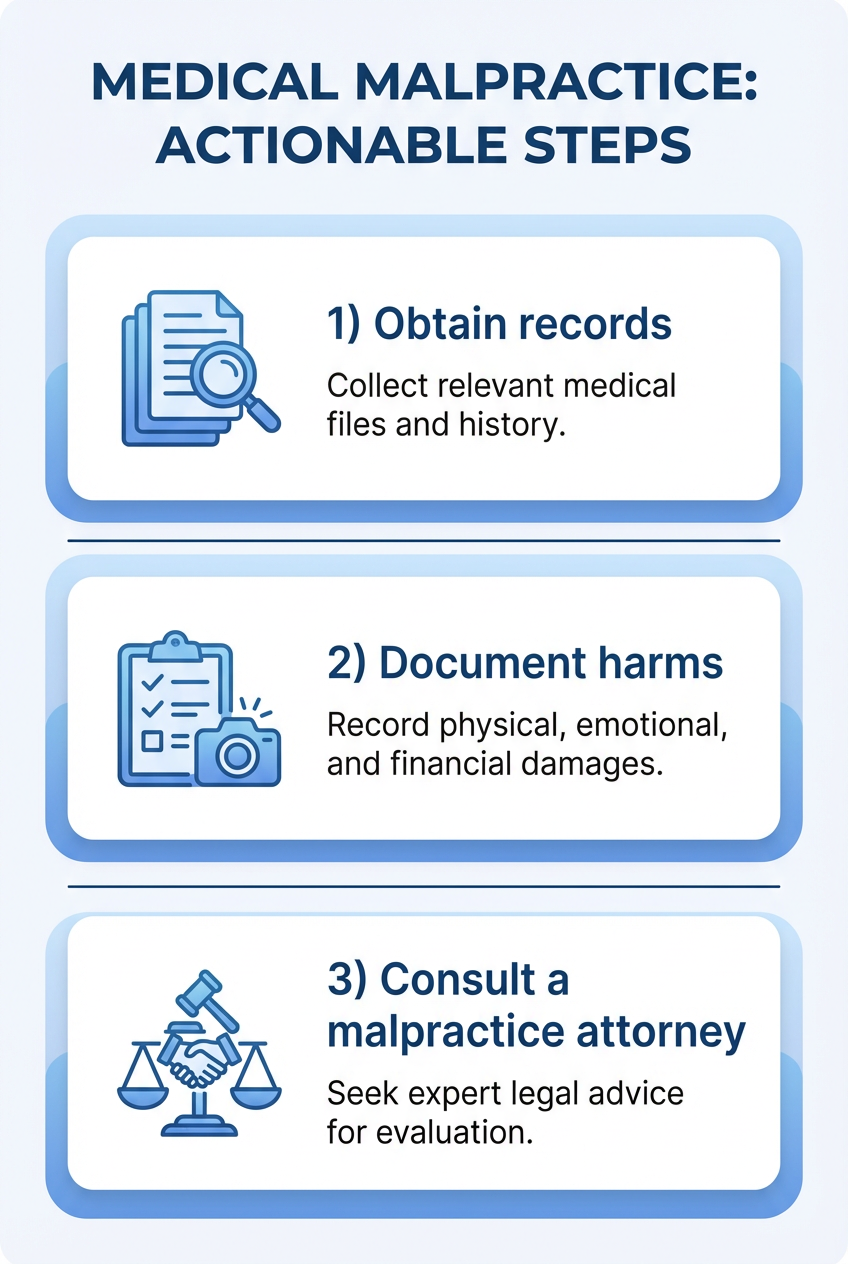
When you suspect an anesthesia error has harmed your loved one, the situation feels overwhelming—but taking the right legal steps after anesthesia error Arkansas incidents can protect your family’s future. Time matters, but you don’t have to navigate this alone.
- Secure all medical records immediately, including anesthesia logs, monitoring strips, and equipment maintenance reports
- Document symptoms and timeline in writing, noting when problems started and how they’ve progressed
- Request independent medical expert review from qualified anesthesiologists or neurologists, not just hospital staff
- **Contact an experienced malpractice attorney within weeks—most work on contingency with no upfront costs
- Preserve physical evidence like medication vials, equipment settings, or monitoring printouts if available
These steps matter because Arkansas gives families two years to file medical malpractice claims, with special rules extending deadlines for children. Acting quickly allows your legal team to gather evidence while memories are fresh and medical records are complete, following established protocols for preserving critical evidence after adverse events.
How Experienced Surgical Malpractice Attorneys Build—and Win—Anesthesia Error Cases
Building a strong anesthesia error case requires matching detailed medical evidence to established legal standards. An experienced surgical malpractice attorney anesthesia errors specialist knows that anesthesia records containing oxygen saturation trends, end-tidal CO2 measurements, blood gas results, and precise timelines form the foundation of every case. These monitoring records must be carefully analyzed alongside professional guidelines to show exactly when and how the standard of care was breached. Research shows that airway-related cases often involve inadequate monitoring documentation and delayed responses to warning signs.
Beyond evidence gathering, trial experience changes everything when insurance companies evaluate risk and settlement offers. Insurers know which firms are prepared to cross-examine hospital experts and present complex medical evidence to juries. A client-focused team with a full-time registered nurse on staff accelerates the entire process, from reviewing thousands of pages of medical records to quickly identifying gaps in monitoring protocols that attorneys might miss. This specialized approach to surgical errors ensures comprehensive damages modeling that accounts for lifetime care needs and lost potential.
Arkansas Anesthesia Error and Brain Injury FAQs
Arkansas families dealing with anesthesia-related brain injuries need specific answers about state law, evidence requirements, and legal options. This Arkansas anesthesia error FAQ addresses the most pressing concerns we hear from families seeking justice and fair compensation.
What are the most common causes of anesthesia errors in Arkansas surgeries?
The most frequent errors include inadequate oxygen monitoring, medication dosing mistakes, and failed airway management during intubation. Equipment malfunctions and communication breakdowns between surgical teams also contribute to preventable injuries. Anesthesia errors often result from rushed procedures or inadequate pre-surgical assessment of patient risks.
How can anesthesia errors during surgery lead to brain injury?
When anesthesia mistakes cut off oxygen to the brain, even for a few minutes, brain cells begin dying permanently. This oxygen deprivation, called hypoxia, can cause memory loss, cognitive problems, or severe developmental delays in children. The brain cannot repair this damage once it occurs, making prevention through proper monitoring essential.
What evidence matters most in proving an anesthesia error caused a brain injury?
Medical records showing oxygen saturation levels, anesthesia charts, and equipment monitoring data provide the strongest evidence. Expert testimony from anesthesiologists and neurologists helps establish how surgical errors violated accepted standards. Timeline documentation linking the error to brain injury symptoms strengthens your case significantly.
What is the statute of limitations for Arkansas medical malpractice claims?
Arkansas gives families two years from when the injury was discovered or reasonably should have been discovered to file a lawsuit. For children under nine, the deadline extends until their eleventh birthday. Acting quickly protects your family’s legal rights and helps preserve important evidence.
How does comparative fault work in Arkansas medical malpractice cases?
Arkansas follows a modified comparative fault rule, meaning you can still recover compensation even if you share some responsibility for the injury. However, if you’re found more than 50% at fault, you cannot recover damages. This rarely applies to anesthesia errors during surgery where patients have no control.
What compensation can be recovered in Arkansas brain injury malpractice cases?
Arkansas allows recovery for medical expenses, lost wages, pain and suffering, and future care costs. Brain injury cases often involve lifetime care needs, specialized therapy, and educational support for children. Medical malpractice compensation can reach millions when properly documented by skilled legal advocates.
How much does it cost to hire a medical malpractice attorney?
At Greer Injury Lawyers, we work on contingency, meaning you pay nothing unless we win your case. This arrangement allows families to access dedicated legal representation and our full-time registered nurse’s expertise without upfront costs. Our fee comes from any settlement or verdict, never from your pocket.
What should I do if the hospital claims this was an ‘accepted risk’ of anesthesia?
Not all complications are acceptable risks. While anesthesia carries some inherent dangers, preventable errors that cause brain injury often constitute negligence. Our legal team can distinguish between unavoidable complications and medical mistakes that violated the standard of care, holding negligent parties accountable.
Next Steps: Compassionate, Trial-Ready Help for Arkansas Anesthesia Error Cases
When anesthesia errors cause brain injuries, families face mounting medical bills and uncertain futures—all while navigating strict legal deadlines. Arkansas law requires medical malpractice claims to be filed within two years of the incident, making prompt action necessary to preserve your rights.
You deserve experienced medical malpractice representation that Arkansas anesthesia error cases require—attorneys who understand both the medicine and the law. Our team includes a full-time registered nurse who reviews cases immediately, and we charge no fees unless we win. We provide individualized attention because your family’s story matters, and we’re ready to fight for you in court when necessary.
Contact Greer Injury Lawyers today for a free, confidential consultation about your anesthesia error case.


Since graduating magna cum laude in 2005 from the University of Memphis School of Law, Thomas has helped make a difference in the lives of victims of serious personal injury, wrongful death, and professional negligence. Thomas has extensive trial experience in both state and federal court. Among other victories in the courtroom, Thomas obtained several impressive jury verdicts and settlements
Read more about Thomas R. Greer